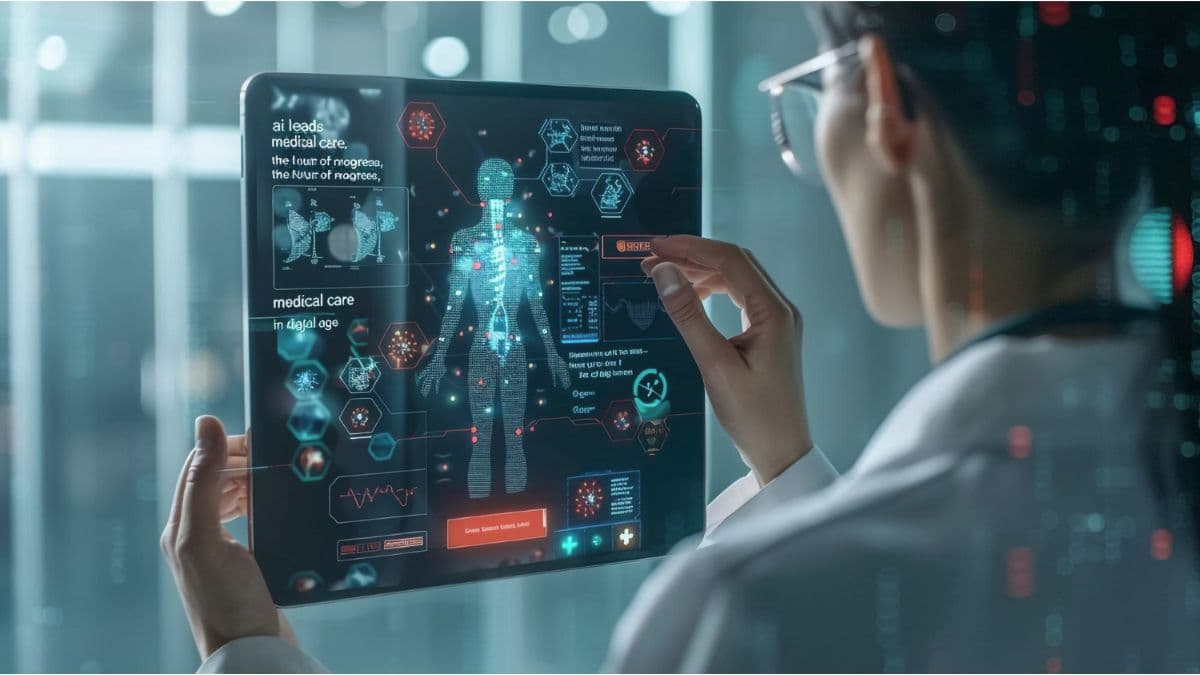
Artificial Intelligence (AI) in Medicine: From Diagnostics to Personalized Treatment
Medicine in the 21st century is undergoing a true technological revolution. Artificial intelligence, once associated solely with science fiction, has become a real tool in the hands of doctors, researchers, and even patients. It penetrates all aspects of medical practice—from initial diagnosis to the development of personalized treatment plans. In an era when digitalization affects all spheres of life—from online education to online entertainment such as virtual casinos—healthcare is also actively integrating AI to improve the accuracy, speed, and quality of medical care.
For fans of online entertainment, we recommend visiting best slovenske online casino, which offers a wide selection of games from leading global providers. In addition, users will immerse themselves in a digital world full of innovations—from high-quality graphics and game mechanics to the best bonus programs.
How AI Has Changed Disease Diagnostics
One of the most remarkable achievements of AI in medicine is the automation of diagnostics. Machine learning systems today can detect pathological changes on MRI, CT, or X-ray scans with accuracy comparable to—or even exceeding—that of humans. For example, neural network–based algorithms are already used in radiology to detect breast cancer, lung cancer, as well as strokes and aneurysms. AI is particularly valuable in diagnosing rare diseases when standard protocols yield no results and the physician may lack sufficient clinical experience.
AI has also significantly accelerated the process of analyzing medical images. Whereas doctors previously needed hours to interpret complex data, the system now provides likely scenarios within minutes. At the same time, the physician is not removed from the process: they receive suggestions and remain the key decision-maker in the final diagnosis. This symbiosis of human experience and machine precision greatly reduces errors and increases treatment effectiveness.
Personalized Treatment and Prognostics
The next significant step is the implementation of AI in personalized medicine. This involves the creation of unique therapeutic plans that consider the genetic, biochemical, and behavioral characteristics of each individual patient. By analyzing big data, AI can identify correlations between gene mutations and the body’s response to specific medications. This allows for the selection of drugs that are not just “generally effective” but truly work for a specific person.
AI is especially active in oncology and immunology, where treatment selection requires consideration of numerous factors. For instance, in patients with leukemia or lung cancer, algorithms help determine how the body will respond to targeted therapy or chemotherapy. This minimizes the risk of side effects and increases the chances of successful treatment.
Moreover, artificial intelligence can forecast disease progression. Systems trained on thousands of medical histories can predict the likelihood of recurrence, complications, or hospitalization with high accuracy. This enables both doctors and patients to react in advance and adjust treatment before a critical phase occurs.
AI and Medical Data Management
The vast amount of information generated in medicine—from electronic health records to genomic data—requires structuring and analysis. AI excels at this task. Using algorithms, it is possible to instantly process millions of records, identify anomalies, forecast hospital workloads, and even model epidemic scenarios.
These technologies also offer enhanced data security. In a context where the confidentiality of medical information is a top concern, especially in Europe, the use of AI makes it possible to create multi-level protection systems that automatically detect hacking attempts and respond swiftly to incidents. This is especially important in the digital age, where data has become a new form of capital, no less valuable than finances or real estate.
Obstacles and Ethical Issues
Despite its impressive success, AI in medicine faces a number of challenges. The first is legal responsibility. If the algorithm makes a mistake, who is to blame—the doctor, the developer, or the clinic? The second is the “black box” issue: how to explain to a patient why the system made a certain diagnosis if even specialists cannot interpret the algorithm?
It is also essential to avoid discrimination. Algorithms learn from data, and if this data contains biases (for example, a predominance of male cases), it may lead to inaccuracies in diagnosing women. These risks require not only technical adjustments but also the development of new ethical standards adapted to the AI era.
Prospects for Slovenia
Slovenia is one of the EU countries actively supporting the introduction of innovations in medicine. In university clinics in Ljubljana, AI solutions are already being tested for analyzing scans and electronic records. Research is also underway in the field of patient digital twins—virtual models of the body that allow for predicting treatment responses before therapy begins.
Interest in technology among the population is also growing. More and more young specialists from Slovenia are undergoing internships at international centers specializing in medical AI. This opens up opportunities for both the development of local healthcare and the export of intellectual solutions abroad. Given Slovenians’ active interest in digital innovations—from telemedicine to online casinos—AI in medicine is not perceived as a threat, but as a natural continuation of the digital transformation of society.
The Future Has Already Arrived
Artificial intelligence is no longer a fantasy and is becoming an integral part of modern medicine. It helps doctors be more accurate, patients recover faster, and healthcare systems operate more efficiently. But like any powerful technology, AI requires conscious and responsible use. Only with such an approach can it serve not as a replacement, but as a reinforcement of human care, attention, and empathy—the key elements of true medicine.